

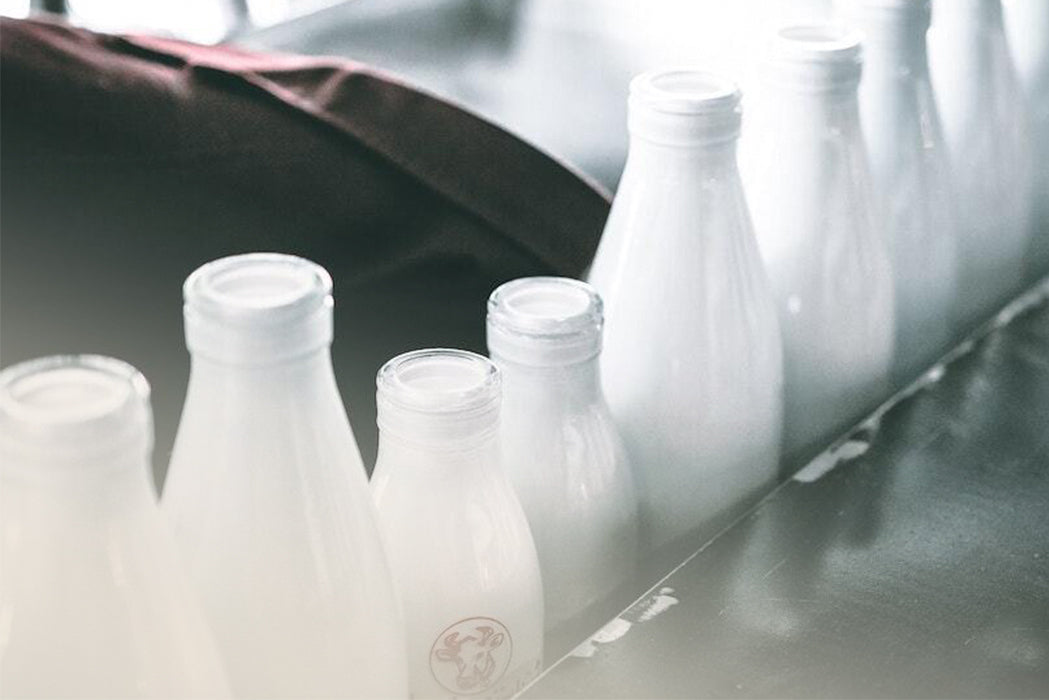


In prehistoric times, people in Europe subsisted on plant-based foods such as wild vegetables, fruits, and other edible plant parts. The development of hunting and fishing added meat, fish, and seafood to their diet. Methods such as salting, smoking, and drying helped preserve food for longer and build up supplies for lean times. Later, additional preservation methods were developed, including pasteurization. This process is particularly well known for foods such as dairy products and beverages.
But what exactly happens during pasteurization? What are the advantages and disadvantages of heat treatment? And how does pasteurization affect kombucha? In this article, you will learn how pasteurization, sterilization, ultra-high temperature treatment, and fermentation differ, and what to look for with raw or pasteurized kombucha.

These methods preserve food
Pasteurization: preserving food through heating
Heat treatment is a common method for extending the shelf life of food. During pasteurization, targeted heating inactivates many pathogenic and spoilage-causing microorganisms. This allows food to be preserved gently. However, pasteurized foods are not automatically free of germs, as pasteurization does not reliably eliminate all microorganisms and spores. Shelf life depends on several factors, including the food, temperature, heating duration, and subsequent packaging. The content of individual heat-sensitive ingredients may also change during heat treatment.
During pasteurization, food is heated to a specific temperature for a set period of time. Temperatures above 60°C are often used. The exact conditions vary depending on the food and process. Pasteurization was named after the French chemist Louis Pasteur, who studied the effects of targeted heat treatments on microorganisms in the 19th century. The process helps make food safer and extend its shelf life.
Many types of cheese, for example, are made from pasteurized milk, while others are made from raw milk. Whether a food should be pasteurized and what conditions are suitable depends on its composition and the desired result.
Sterilization and ultra-high temperature treatment
Sterilization and ultra-high temperature treatment use intense heat to treat food, inactivating microorganisms largely or, in suitable processes, reliably on a commercial scale. These processes differ from pasteurization in the temperature-time combinations used and the intended shelf life. However, stronger heat treatment can affect taste, texture, and heat-sensitive nutrients.
Ultra-high temperature milk, also known as UHT milk, is heated to at least 135°C for a few seconds and then filled under hygienic conditions. When unopened and stored properly, it generally lasts several months. The information on the packaging is authoritative.
Sterilized milk is heated for a longer period, for example at temperatures around 110 to 120°C. Depending on the manufacturing process and packaging, it can last many months unopened. The stronger heat exposure can affect taste and heat-sensitive vitamins. Whether milk has been ultra-high temperature treated or sterilized cannot be reliably determined by its long shelf life alone. Therefore, pay attention to the product labeling.
Homogenization
During homogenization, fat globules or other components of a liquid are reduced in size and distributed more evenly. This prevents, for example, a layer of cream from forming on the surface of milk. To do this, the milk is pressed through a fine opening under high pressure. The milk fat contained within is broken into smaller globules and distributed evenly throughout the milk. Homogenization is often combined with heat treatments such as pasteurization or ultra-high temperature treatment. It is primarily used to influence the physical properties and consistency of the product and is not itself a method for reliably killing pathogens.

Fermentation: preserving food with the help of microorganisms
Fermentation is a biological method for producing and, in some cases, preserving food. During this process, microorganisms such as bacteria and yeasts convert certain ingredients. Depending on the culture and starting product, organic acids, gases, alcohol, and other fermentation products can be produced. These influence the taste, aroma, and properties of the food.
Fermented foods include, for example, bread, yogurt, cheese, sauerkraut, kimchi, and kombucha. Fermentation also plays an important role in the production of beer and other alcoholic beverages. Possible benefits include the development of characteristic aromas, the alteration of certain ingredients, and—in suitable processes—a longer shelf life. During this process, enzymes and microorganisms convert organic substances into other compounds. Which changes actually occur depends on the food and the respective fermentation process.
Which foods are pasteurized?
Pasteurization is used for many liquid and moist foods. The process is particularly well known for milk and dairy products. Fruit and vegetable juices, liquid eggs, and certain prepared dishes can also be pasteurized. Heat treatment is often combined with other preservation methods. These include, for example, a low pH, hygienic filling, and suitable packaging. Whether an unopened product needs to be refrigerated depends on the manufacturing process and the information on the packaging. This also applies to beverages such as juices and kombucha: not every product is preserved in the same way.
Pasteurized kombucha vs. raw kombucha
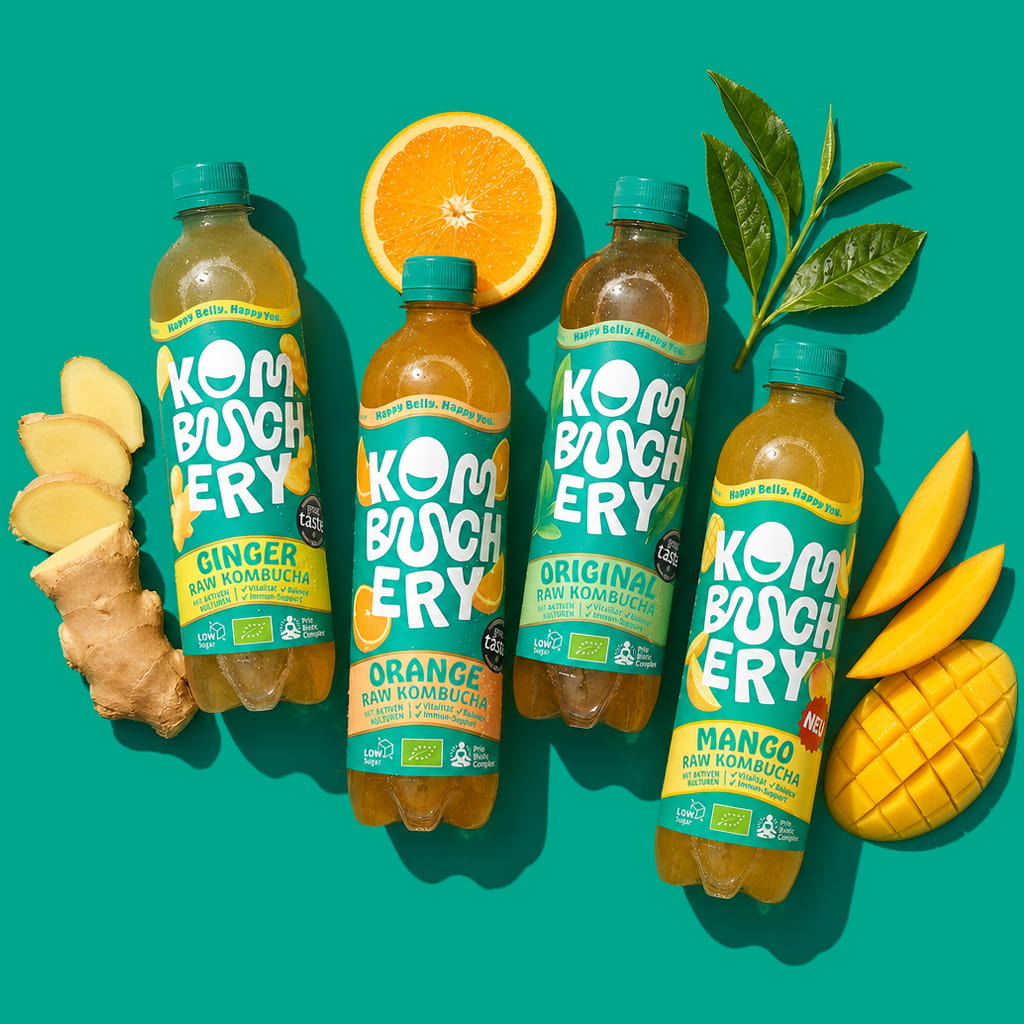
There is an important difference in how kombucha is processed. Some manufacturers pasteurize their kombucha after fermentation to stabilize it microbiologically and reduce the activity of microorganisms. Others offer raw, unpasteurized kombucha.
Heat treatment inactivates many heat-sensitive living microorganisms. In contrast, raw and unpasteurized kombucha may still contain live cultures in the finished beverage. How many microorganisms are present and how active they remain depends on several factors, including production and storage.
Pasteurization primarily changes the microbiological state of the beverage. Ingredients such as tea, organic acids, and flavorings do not automatically disappear as a result. However, the taste and composition may change due to heat treatment.
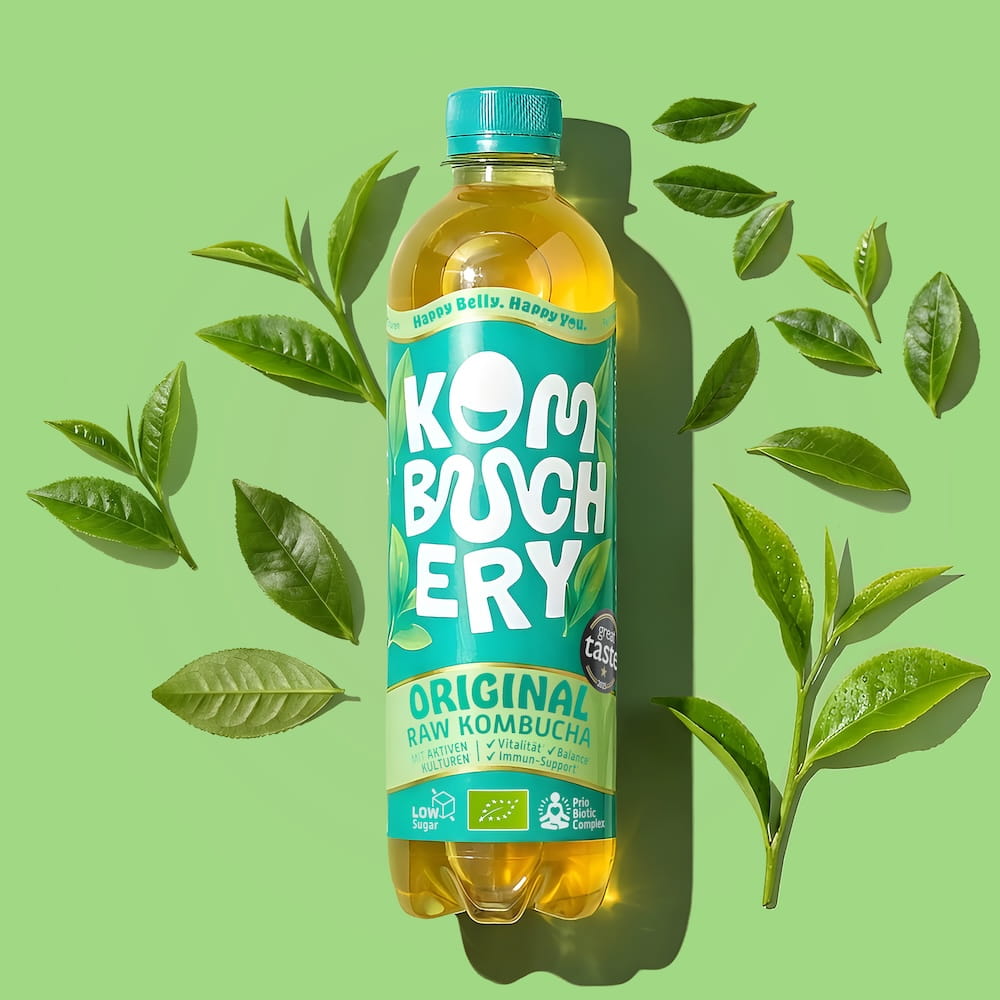
If you value live cultures, look for terms such as “raw,” “raw,” or “unpasteurized” when purchasing. However, the label alone does not indicate which microorganisms are present in the beverage or in what quantity. The storage instructions on the packaging are also important.
What is the difference between raw and pasteurized kombucha?
The most important difference is the heat treatment after fermentation. Raw kombucha is not pasteurized and therefore may contain live microorganisms. In pasteurized kombucha, heating inactivates many heat-sensitive microorganisms. Which kombucha is right for you depends on which product characteristics are important to you and what storage instructions the manufacturer provides.
- Raw kombucha: unpasteurized; may contain live cultures.
- Pasteurized kombucha: heat-treated to reduce the activity of many microorganisms and improve microbiological stability.
- Shelf life: depends on production, filling, packaging, and storage conditions—not solely on whether a beverage has been pasteurized.










Share:
2 comments
Hallo liebe Malena, unser Kombucha ist immer roh und unpasteurisiert – also mit aktiven Mikroorganismen & Nährstoffen.
Hallo,
vielen Dank für den informativen Artikel.
Ist euer kombucha-Getränk nun pasteurisiert oder nicht? Oder nur gefiltert?
Danke vorab für die Antwort!